Work Visa for USA from Pakistan and Work Visa Options in the USA, UK, Canada, Germany, France, Switzerland, Australia, Netherlands, Sweden, Norway, New Zealand, Ireland, Finland, Denmark and Japan
Updated: August 2026
If you are living in Pakistan and planning to work abroad, choosing the right country can feel like standing at a crossroads with fifteen different roads in front of you. The USA, UK, Canada, Germany, France, Switzerland, Australia, Netherlands, Sweden, Norway, New Zealand, Ireland, Finland, Denmark, and Japan all offer employment opportunities for foreign workers, but their immigration systems are very different. Some countries generally require an employer to sponsor you before you apply, while others have job-search or points-based routes that can give qualified professionals more flexibility.
For Pakistani workers, the most important point is simple: a work visa normally requires a genuine legal basis for employment. You cannot usually enter a country on a tourist visa and simply start working. Depending on the destination, you may need an employment contract, employer sponsorship, labour-market approval, professional qualification, salary threshold, language ability, or a government-issued work authorization before beginning employment.
The United States is particularly important because its employment visa system is divided into several categories rather than one universal “USA work visa.” The U.S. Department of State explains that temporary workers must qualify for the visa category that matches their proposed employment, with categories including H, L, O, P and Q classifications.
This guide explains the major work visa pathways from Pakistan and compares them with important alternatives in Europe, North America, Australia, New Zealand and Japan. Immigration rules can change, so applicants should always verify the final requirements with the official immigration authority before paying an agent, accepting a job, or submitting an application.
Table of Contents
- What Is a Work Visa?
- Work Visa for the USA from Pakistan
- Common USA Employment Visa Categories
- How Pakistani Applicants Can Apply for a USA Work Visa
- UK Work Visa for Pakistani Citizens
- Canada Work Permit from Pakistan
- Germany Work Visa and Opportunity Card
- France Work Visa
- Switzerland Work Permit
- Australia Work Visa
- Netherlands Work Visa
- Sweden Work Permit
- Norway Skilled Worker Visa
- New Zealand Work Visa
- Ireland Work Visa
- Finland Work Visa
- Denmark Work Visa
- Japan Work Visa
- USA vs Other Countries: Work Visa Comparison
- Conclusion and FAQs
1. What Is a Work Visa?
A work visa or work residence permit is government authorization allowing a foreign national to perform employment legally in another country. The exact terminology varies. The United States generally uses visa classifications and immigration statuses, Canada commonly uses work permits, and European countries frequently issue residence permits that include the right to work. Although the names differ, the basic concept is similar: immigration authorities want to know who is employing you, what job you will perform, whether you meet the legal requirements, and whether your employment is permitted under the relevant immigration program.
For someone applying from Pakistan, the first step should therefore be identifying the correct immigration category, not simply searching online for “work visa.” A software engineer might qualify for a skilled-worker route, while a farmer could need a seasonal agricultural program. A multinational employee may qualify for an intra-company transfer, while an exceptional researcher, artist or athlete may have an entirely different route. The job, education, experience, salary, employer and destination country all influence the answer.
A genuine employment offer is especially important for many programs. For example, New Zealand’s Accredited Employer Work Visa requires a full-time job offer from an accredited employer, while Norway’s skilled-worker route normally requires a job offer. Finland also requires confirmed employment before applying for its residence permit for an employed person.
2. Work Visa for the USA from Pakistan
The USA work visa for Pakistani citizens is not a single visa category. Instead, the United States has different employment-based temporary and immigrant pathways. For temporary employment, the U.S. Department of State lists categories such as H, L, O, P and Q, while other employment-related categories exist for specific circumstances.
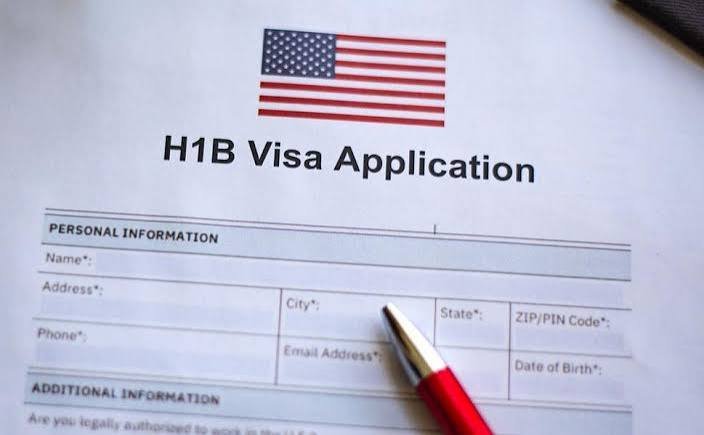
For many Pakistani professionals, the most familiar route is the H-1B visa, which is designed for specialty occupations requiring highly specialized knowledge. Other workers may fit H-2A agricultural, H-2B temporary non-agricultural, L-1 intracompany transfer, O-1 extraordinary ability, or other categories depending on their circumstances. USCIS materials describe H-2A as a route for temporary or seasonal agricultural work and H-2B as a route for temporary non-agricultural employment.
This distinction matters because you cannot simply choose whichever U.S. visa sounds easiest. Your employer, occupation and circumstances determine which category may be appropriate.
For a Pakistani applicant, the process commonly begins before the embassy interview. In petition-based categories, the U.S. employer generally has to complete the required petition process with U.S. authorities. Once the relevant petition or approval is available, the worker follows the Department of State’s visa application process, which can include completing the DS-160, paying the applicable fee and attending an interview.
The U.S. Department of State states that applicants for nonimmigrant visas should generally schedule interviews in their country of nationality or residence under guidance updated in July 2026.
3. Common USA Employment Visa Categories
The H-1B visa is one of the best-known U.S. professional employment routes. It is generally associated with specialty occupations such as technology, engineering, science, finance and other professional fields where the position and applicant satisfy the applicable requirements. H-1B cases can be subject to numerical limitations and selection procedures, so obtaining a U.S. job offer does not automatically mean that the applicant will receive an H-1B visa.
USCIS reported that the FY 2026 H-1B initial registration selection process reached the numerical allocations, including the advanced-degree exemption, during the 2025 registration cycle.
The H-2A visa is aimed at temporary agricultural employment. It can be relevant to farm-related jobs, but the U.S. employer must satisfy specific requirements, including demonstrating a temporary or seasonal need and meeting labour certification requirements.
The H-2B visa covers qualifying temporary non-agricultural jobs. Employers must generally demonstrate that the need is temporary and satisfy labour-related requirements before petitioning for workers. Because the H-2B program is numerically limited, availability can be an important consideration.
The L-1 visa can be useful for employees of multinational companies who qualify for an intracompany transfer. The O-1 visa is designed for individuals with extraordinary ability in fields such as sciences, education, business, arts or athletics. Other classifications exist for particular workers, exchange programs and international activities.
4. How Pakistani Applicants Can Apply for a USA Work Visa
The first step is finding a legitimate U.S. employer or qualifying organization willing and legally able to employ or sponsor you. Be cautious if someone promises a guaranteed American job or guaranteed visa in exchange for a large upfront payment. Immigration approval is never something a private agent can guarantee.
After obtaining the appropriate employment arrangement, the employer may need to submit a petition or complete other government procedures depending on the visa category. The applicant then follows the relevant U.S. Department of State process. For nonimmigrant visas, the DS-160 is an important part of the application process; the Department of State says applicants must complete the form electronically, then follow the applicable interview and fee instructions for the post where they will apply.
For Pakistani applicants, U.S. visa services are available through Islamabad and Karachi, with Islamabad handling all categories of nonimmigrant and immigrant visas and Karachi handling nonimmigrant visa services for applicants in Sindh and Balochistan under the stated procedures.
Your documents should be consistent and truthful. Depending on the visa, you may need your passport, employment documents, petition information, educational records, professional evidence, photographs and other supporting documents. A consular officer may ask questions about your employment, employer, qualifications and intended activities in the United States.
The key lesson is that a U.S. work visa is an employment-based immigration process, not a shortcut for moving to America. Your job and visa category must fit the legal requirements.
5. UK Work Visa for Pakistani Citizens
The United Kingdom is another major destination for Pakistani professionals. One of the principal routes is the Skilled Worker visa, which requires an eligible job with an approved UK sponsor. GOV.UK states that applicants generally need a job offer from an approved employer and a Certificate of Sponsorship before applying.
The salary requirement is also important. Current UK guidance states that the standard Skilled Worker salary requirement is generally £41,700 per year or the applicable going rate for the occupation, whichever is higher, although specific discounts and alternative rules can apply in qualifying circumstances.
For Pakistani applicants, this means the strongest candidates are often those with recognized qualifications, relevant experience and occupations that are eligible under the current UK immigration rules. Healthcare, technology, engineering and other professional sectors can have different requirements, so applicants should check their occupation code rather than relying only on a job title.
A UK employer must also be properly authorized to sponsor workers. The applicant should verify that the employer is legitimate and that the job genuinely exists. This is particularly important because fake sponsorship offers can lead to financial loss and immigration problems.
6. Canada Work Permit from Pakistan
Canada uses work permits rather than a single general work visa. A Pakistani applicant may qualify for an employer-specific work permit, an open work permit in certain circumstances, or another specialized program.
For an employer-specific permit, Canada explains that the applicant normally needs a job offer and that the employer may need a Labour Market Impact Assessment (LMIA). An LMIA generally demonstrates that there is a need for a foreign worker and that the relevant Canadian labour-market requirements have been met.
There are also LMIA-exempt pathways under the International Mobility Program. Canada identifies examples including certain Francophone Mobility applicants, Global Skills Strategy cases and workers covered by free-trade agreements.
For someone applying from Pakistan, the process normally involves identifying the appropriate Canadian program, securing the required employment documentation, preparing the application and meeting admissibility requirements. Canada also provides specific procedures for people applying for work permits from outside the country.
Canada can be attractive because employment-based immigration can sometimes connect with longer-term immigration pathways, but a temporary work permit should not automatically be treated as permanent residence. Eligibility for permanent residence depends on the specific program and the applicant’s circumstances.
7. Germany Work Visa and Opportunity Card
Germany has become particularly interesting for international professionals because its immigration system includes both employment-based residence permits and the Opportunity Card.
The Opportunity Card can allow eligible qualified people from outside the EU/EEA to enter Germany to search for employment even without already holding a specific job offer. The official “Make it in Germany” portal states that the job-search Opportunity Card is initially issued for a maximum of one year, and holders can perform limited part-time work while searching for qualified employment.
This makes Germany different from countries where an employer offer is always the starting point. Qualified applicants may enter under the appropriate job-search route, look for suitable employment, and then transition to an appropriate residence permit once they secure a qualifying position.
The Opportunity Card can be based on recognized qualifications or a points system. Language skills, professional experience, age and other factors can contribute depending on the route.
For Pakistani applicants, Germany can therefore be worth investigating if you have a recognized academic or vocational qualification, relevant professional experience and a realistic career plan. Learning German can also make job searching easier, even where the formal immigration requirement may allow English.
8. France Work Visa
France offers several professional immigration routes, including salaried employment, temporary employment, international transfers, seasonal employment and talent-related categories.
For standard recruitment by a French company, the employer generally has to obtain the required work authorization before the foreign worker applies for the appropriate visa. France-Visas explains that fixed-term and permanent recruitment can involve prior work authorization, followed by a visa corresponding to the employment and duration.
A long-stay employee visa may be appropriate for qualifying permanent employment, while temporary contracts can involve a temporary-worker category. Seasonal workers have separate rules, including limits on the amount of time they may work in France during a rolling period.
For Pakistani workers, French language ability can be a major practical advantage even when a particular professional role is advertised in English. France is especially worth considering for candidates with professional qualifications in technology, engineering, healthcare, research, hospitality and other fields where international recruitment is possible.
9. Switzerland Work Permit
Switzerland has a highly selective system for workers from outside the EU/EFTA. The Swiss State Secretariat for Migration states that third-country nationals who want to work in Switzerland generally must be highly qualified, while the number of permits is limited. Employers also have to demonstrate that they cannot fill the vacancy with a suitable person from Switzerland or the EU/EFTA in accordance with the applicable rules.
This makes Switzerland significantly different from a country such as Germany, where a qualified job seeker may have a dedicated job-search pathway.
A Pakistani professional interested in Switzerland should therefore focus on obtaining a strong employment offer before planning the move. A university degree, specialist skills, professional experience and a profile that is difficult for the employer to source locally can improve the practical prospects.
Switzerland is attractive because of its high salaries and quality of life, but those advantages come with a more selective immigration environment. Applicants should not assume that a high-paying job alone guarantees a permit.
10. Australia Work Visa
Australia has several skilled and employer-sponsored visa pathways. One major temporary route is the Skills in Demand visa, subclass 482, which allows an approved sponsor to nominate a suitably skilled overseas worker for a position it cannot fill with an appropriately skilled Australian worker.
The visa can allow a stay of up to four years depending on the stream and circumstances. Australia’s current guidance also includes income thresholds that are updated periodically. For the 2026–27 period, the Core Skills Income Threshold is listed as AUD 79,423, while the Specialist Skills Income Threshold is AUD 146,576 for relevant nomination applications.
Australia can be particularly attractive to professionals in occupations that are experiencing shortages. However, the exact occupation, skills, employer, salary and stream matter.
For Pakistani applicants, the practical approach is to identify an eligible occupation first, assess qualifications and experience, and then determine whether employer sponsorship or another skilled migration route fits. English-language ability can also be an important part of Australia’s immigration system.
11. Netherlands Work Visa
The Netherlands is a popular destination for technology professionals, engineers, researchers and other highly skilled workers. One major route is the Highly Skilled Migrant residence permit.
The Dutch Immigration and Naturalisation Service states that a highly skilled migrant normally needs an employment contract with a Dutch employer or research institution that is a recognized sponsor, along with satisfaction of income requirements and other conditions.
The recognized-sponsor requirement is an important point. A Pakistani applicant should not assume that every Dutch company can sponsor a highly skilled migrant. Before accepting an offer, check whether the employer has the necessary recognition.
The Netherlands can be particularly attractive for professionals working in technology, engineering, finance, research and international business. English is widely used in many professional environments, but Dutch can be valuable for long-term integration and for occupations where local-language skills are expected.
12. Sweden Work Permit
Sweden requires most non-EU/EEA citizens to obtain a work permit to work legally. The Swedish Migration Agency states that employees from outside the EU/EEA generally need a work permit and that family members may be able to apply alongside the worker.
A significant development for 2026 is the new Swedish salary requirement. From June 1, 2026, the salary for a work permit generally needs to reach at least 90% of the Swedish median salary, alongside other applicable requirements.
This means Pakistani applicants considering Sweden should pay close attention to the salary stated in the employment contract. A job that sounds attractive may not qualify if the compensation does not meet the current immigration rules.
Sweden is well known for technology, engineering, manufacturing, healthcare and research opportunities. Strong English skills can help in many professional environments, although Swedish language ability may become increasingly important depending on the job and workplace.
13. Norway Skilled Worker Visa
Norway offers a skilled-worker residence permit for eligible foreign professionals. According to the Norwegian Directorate of Immigration, applicants who have completed higher education or vocational training can apply as skilled workers, and they normally need a job offer or their own qualifying business.
This route is particularly relevant to professionals with formal qualifications and an employment offer matching their expertise. The employer and job must satisfy the applicable Norwegian requirements, and certain applications from abroad require confirmation of the job offer.
Norway can appeal to engineers, IT specialists, healthcare professionals, skilled tradespeople and other qualified workers. Salaries can be attractive, but the cost of living is also relatively high.
For a Pakistani applicant, obtaining the job offer is usually the most important practical milestone. A well-prepared CV, recognized qualifications, relevant experience and evidence of professional competence can make the application process much more credible.
14. New Zealand Work Visa
New Zealand’s principal employer-supported temporary route is the Accredited Employer Work Visa (AEWV). Applicants need a full-time job offer from an accredited employer, and the employer must have completed the relevant job-check process.
The AEWV can allow a worker to stay for up to five years, depending on the occupation, skill level, pay and application circumstances. Immigration New Zealand also states that the job must generally offer at least 30 hours of work per week.
One of the best protections for applicants is the ability to verify whether an employer is accredited. Immigration New Zealand maintains an accredited-employer list that can be searched by employer name or New Zealand Business Number.
This is extremely important for Pakistani job seekers. Never rely solely on a WhatsApp message, Facebook post or agent’s claim that an employer is approved. Check the employer through official government resources before paying recruitment-related money or sending sensitive documents.
15. Ireland Work Visa
Ireland has employment-permit routes designed for different categories of workers. One particularly important route for highly skilled professionals is the Critical Skills Employment Permit.
Ireland’s Department of Enterprise states that the Critical Skills Employment Permit is intended to attract highly skilled workers into occupations considered important to the economy and suffering from significant shortages. Eligible fields include areas such as ICT, engineering and technology.
Ireland also updated its Critical Skills Occupations List in May 2026, meaning applicants should use the current list rather than older online articles when determining whether their occupation qualifies.
For Pakistani professionals, Ireland can be especially interesting for technology and engineering careers. English is the primary working language, which removes one major barrier faced by applicants considering some continental European countries.
However, having an occupation that sounds similar to an eligible job is not enough. The actual occupation, qualifications, employment contract and salary must satisfy the current permit rules.
16. Finland Work Visa
Finland generally uses a residence permit based on employment for non-EU workers. The Finnish Immigration Service states that an applicant using the standard residence permit for an employed person must have confirmed employment before applying.
For 2026, the minimum gross salary for the standard residence permit for an employed person is €1,600 per month, subject to the rules and exclusions described by the Finnish Immigration Service.
Finland can be appealing for people interested in technology, engineering, healthcare, manufacturing and specialist occupations. The country also has routes for specialists and other highly qualified professionals.
An interesting current statistic is that Finland’s immigration authority reported an average processing time of 23 days in May 2026 for first residence-permit applications for employed persons that resulted in a positive decision. This is an average for that category and should not be interpreted as a guaranteed processing time for an individual applicant.
17. Denmark Work Visa
Denmark offers several work and residence schemes. One prominent route is the Pay Limit Scheme, which allows qualified foreign workers with sufficiently high salaries to apply for a residence and work permit.
The Danish immigration authority currently states that the minimum annual salary under the Pay Limit Scheme for 2026 is DKK 552,000. It also lists a normal processing time of approximately one month, although cases requiring additional information can take longer.
The interesting part of this scheme is that a specific educational background or particular professional field is not necessarily required under the basic Pay Limit Scheme; the salary requirement is central.
For Pakistani applicants, Denmark can therefore be attractive to experienced professionals who can secure a well-paid job offer. As with every country, however, the employment contract must meet the current rules and the applicant must satisfy all other immigration conditions.
18. Japan Work Visa
Japan has multiple work-related residence statuses. The correct category depends on the type of work and the applicant’s qualifications.
One route is the Specified Skilled Worker program, which has categories with different permitted periods of stay and requirements. Japan’s Ministry of Foreign Affairs states that the Specified Skilled Worker visa requires documents including a passport, visa application form, photograph and Certificate of Eligibility (COE).
The COE is important because it confirms that the applicant meets the relevant landing conditions for the activity described in the application. A proxy in Japan can apply for the COE in qualifying circumstances.
Japan may be suitable for applicants interested in manufacturing, hospitality, caregiving, construction, agriculture and other sectors covered by relevant programs. Japanese-language ability can be extremely valuable and, depending on the route, may be an important eligibility requirement.
19. USA vs Other Countries: Work Visa Comparison
The best country depends heavily on your occupation, qualifications, salary, language skills and long-term immigration goals. There is no single country that is automatically easiest for every Pakistani applicant.
| Country | Main employment route/example | Job offer usually needed? | Key consideration |
|---|---|---|---|
| USA | H-1B, H-2A, H-2B, L-1, O-1 and others | Usually | Visa category and employer petition |
| UK | Skilled Worker | Yes | Approved sponsor and salary requirements |
| Canada | Employer-specific work permit | Usually | LMIA or qualifying exemption |
| Germany | Skilled employment / Opportunity Card | Not always | Qualification recognition and job search |
| France | Salaried employee / temporary worker | Usually | Work authorization and employment contract |
| Switzerland | Third-country skilled employment | Yes | Highly qualified status and permit limits |
| Australia | Skills in Demand 482 | Yes | Employer sponsorship, occupation and salary |
| Netherlands | Highly Skilled Migrant | Yes | Recognized sponsor and income requirement |
| Sweden | Work permit | Yes | Salary and employment conditions |
| Norway | Skilled Worker | Usually | Relevant qualifications and job offer |
| New Zealand | AEWV | Yes | Accredited employer and job check |
| Ireland | Critical Skills Employment Permit | Yes | Eligible occupation and salary |
| Finland | Residence permit for employed person | Yes | Confirmed employment and income |
| Denmark | Pay Limit Scheme and others | Yes | Salary threshold and employment |
| Japan | Professional / Specified Skilled Worker routes | Usually | Appropriate status and often COE |
The comparison shows an important pattern. Germany stands out because eligible applicants can use the Opportunity Card to search for employment without first having a specific job offer, whereas many employer-sponsored systems require the job to come first.
The USA, UK, Canada, Australia and Netherlands can be especially attractive when you already have an employer willing to sponsor you. Switzerland is more selective for third-country nationals, while Finland, Sweden, Denmark and Norway have their own salary, qualification or employment conditions.
For Pakistani applicants, another practical factor is language. English-speaking destinations such as the USA, UK, Canada, Australia, New Zealand and Ireland can be easier to navigate professionally if your English is strong. Germany, France, Finland, Sweden, Norway, Denmark and Japan may provide excellent opportunities, but learning the local language can improve employment prospects and daily life.
20. How to Find a Genuine Overseas Job from Pakistan
Finding the employer is often harder than completing the visa form. Immigration authorities generally want evidence of a genuine employment relationship, which means your first priority should be legitimate recruitment.
Start by preparing a professional CV tailored to international employers. Instead of sending the same generic CV everywhere, adjust it to the occupation and country. Highlight measurable achievements, certifications, education, years of experience, software skills, professional licenses and language abilities.
Use legitimate company career pages and recognized employment platforms. If an employer contacts you, research the company independently. Check whether its website, physical presence, corporate information and job vacancy are genuine.
You should also understand the difference between employer fees and worker fees. Some countries place restrictions on employers charging migrant workers recruitment costs. New Zealand, for example, explicitly states that employers or agents cannot charge migrants fees for a job or make them pay the employer’s recruitment costs under the AEWV system.
Be especially cautious about offers promising a guaranteed visa, guaranteed salary, guaranteed permanent residence or a job without an interview. A legitimate immigration process involves government requirements and cannot simply be purchased.
Documents Pakistani Applicants Should Prepare
Although every country has its own checklist, many employment visa applications may require some combination of:
- Valid Pakistani passport
- Recent photographs
- Employment contract or job offer
- Employer sponsorship or work authorization
- Educational certificates
- Professional licenses where required
- Experience letters
- Updated CV or résumé
- Police clearance or character documents where required
- Proof of language ability where applicable
- Financial evidence where required
- Medical examination where required
- Translations of documents where necessary
- Previous immigration records where relevant
The most important principle is consistency. Your passport, CV, employment history, education documents and application forms should tell the same story. False documents or misleading information can create serious immigration consequences.
Which Country Is Best for Pakistani Workers?
If your primary goal is the United States, focus on finding an employer and identifying the correct employment visa category. The USA can provide exceptional opportunities, particularly in professional and specialized fields, but some employment categories are highly competitive.
If you want an English-speaking destination with a structured skilled-worker system, the UK, Canada, Australia, New Zealand and Ireland may be worth comparing. Each has different sponsorship, salary and occupational requirements.
If you are a qualified professional but do not yet have an employer, Germany’s Opportunity Card may deserve special attention because eligible applicants can enter Germany for job searching under the relevant rules.
If you have a high-paying professional offer, Denmark, Switzerland, Netherlands, Sweden and Norway can also be interesting, although their immigration requirements can be selective.
For people willing to learn another language and build a long-term career in a different culture, France, Germany, Finland, Japan and the Nordic countries can provide additional opportunities.
The best destination is therefore not necessarily the country with the highest salary. A better question is: Which country has an immigration pathway that matches my actual job, qualifications, salary and career plans?
Conclusion
Getting a work visa for the USA from Pakistan is possible, but the route depends on the job and the specific U.S. immigration category. There is no universal American work visa that every Pakistani applicant can simply apply for. Employer sponsorship, petitions, occupational requirements and visa-specific rules can all play a role.
At the same time, Pakistani workers have many alternatives. The UK offers the Skilled Worker route, Canada has employer-specific and other work permits, Germany has skilled-worker residence permits and the Opportunity Card, Australia has employer-sponsored skilled routes, and New Zealand uses the Accredited Employer Work Visa. Ireland, Netherlands, Sweden, Norway, Finland, Denmark, France, Switzerland and Japan also have employment-based pathways for eligible foreign workers.
The smartest strategy is to choose the immigration route before paying an agent. Identify your occupation, check your qualifications, search for genuine employers, verify sponsorship eligibility, calculate the required salary and then use the official government website for the final application instructions.
Immigration rules change frequently, particularly salary thresholds, eligible occupations and employer requirements. For that reason, information published in an old Facebook post or a several-year-old blog article should never be treated as the final authority. Use official government sources, keep copies of every document, and never submit false information.
For Pakistani applicants, international employment is a realistic goal when approached professionally. Your strongest advantage is not an agent’s promise; it is a genuine job, relevant skills, proper documentation and an immigration route that actually matches your circumstances.
Frequently Asked Questions
1. Can I apply for a USA work visa from Pakistan?
Yes, eligible Pakistani citizens can apply for U.S. employment-based visas from Pakistan. The appropriate process depends on the visa category and employment situation. The United States has multiple employment classifications, and petition requirements can apply before the visa application stage.
2. Is a job offer required for a USA work visa?
For many temporary U.S. employment categories, an employer or qualifying petitioner is central to the process. However, requirements vary by visa classification. Some categories, such as O-1, have different eligibility standards from H-1B or H-2 programs, so applicants must determine the correct category rather than assuming all U.S. work visas work the same way.
3. Which country is easiest for Pakistani workers?
There is no universally easiest country. Germany’s Opportunity Card can be particularly interesting for qualified applicants who do not yet have a job offer, while employer-sponsored routes may be more suitable for people who already have an international employment offer. Eligibility depends on education, experience, occupation, salary, language and other factors.
4. Can I get a work visa without a job offer?
Some countries provide limited job-search pathways. Germany’s Opportunity Card is a notable example for eligible qualified applicants and can allow job searching for an initial period of up to one year. However, many other employment routes require a job offer before the visa or residence application.
5. How can I avoid fake work visa agents?
Verify the employer independently, check whether the employer is authorized to sponsor foreign workers, avoid anyone promising guaranteed visa approval, and use official immigration websites for requirements. Never pay large amounts simply because someone claims to have a guaranteed foreign job. If an offer sounds too good to be true, independently investigate it before sending money or personal documents.