Employment Visa in UAE: Complete Guide to Requirements, Process, Costs and Rules in 2026
1. What Is an Employment Visa in the UAE?
An employment visa in the UAE allows a foreign national to legally enter, reside in and work in the United Arab Emirates after receiving employment from an eligible UAE-based employer. For most expatriate employees, the process involves several connected stages rather than one single document. The employer generally arranges the work permit, entry authorization and employment-related residency procedures, while the worker completes requirements such as medical fitness testing and Emirates ID registration. The UAE government confirms that working without a valid work permit is illegal, making the correct visa and work authorization essential for anyone planning to take a job in the country.
It is useful to think of the process as a chain: job offer → work permit → entry or status change → medical fitness test → Emirates ID → residence visa. If one link is missing, the employee may not be legally permitted to begin working. The exact procedure can differ depending on whether the employer is a mainland company, free-zone company, government entity or another type of organization, and Dubai applications can also involve the General Directorate of Residency and Foreigners Affairs. For private-sector employment, the UAE’s official employment process states that the worker normally receives a formal offer, signs the employment contract, receives the work permit and then completes the work visa or residence procedures.
1.1 Work Permit vs Employment Residence Visa
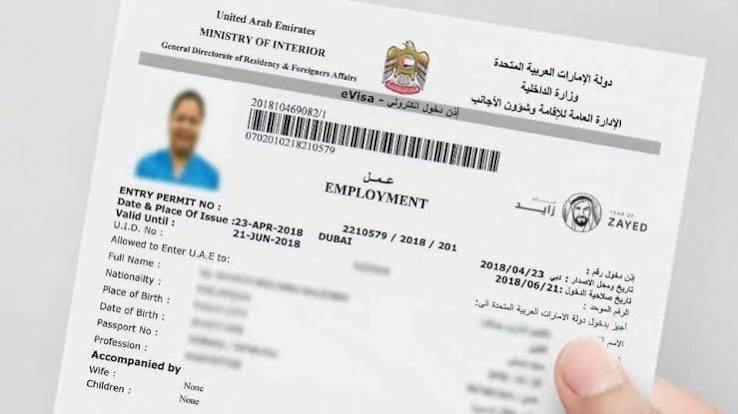
One of the most common sources of confusion is treating a work permit and employment residence visa as exactly the same thing. They are connected, but they serve different purposes. A work permit issued through the Ministry of Human Resources and Emiratisation, commonly called MoHRE, provides the legal authorization to work for the relevant employer. The residence visa, on the other hand, gives an eligible expatriate the legal right to live in the UAE for the approved period.
The distinction matters because an employee could have an employment-related entry authorization while still needing to complete medical, Emirates ID and residency procedures. According to the official UAE government portal, MoHRE currently lists 13 categories of work permits, including permits for recruiting workers from outside the UAE, transferring workers between establishments, employing people under family sponsorship, part-time work, freelance work and other situations.
2. Who Needs a UAE Employment Visa?
Most foreign nationals who want to live and work for a UAE employer need appropriate employment authorization and residency status. The UAE government explains that, except for GCC nationals, expatriates generally require a residence visa to live or work in the country. Employers normally act as sponsors for foreign employees under standard employment arrangements, although the immigration framework also provides alternative residence categories for certain professionals, investors, remote workers and other eligible individuals.
For an ordinary expatriate employee, the employer usually begins the process after offering the applicant a job. The company must itself be properly registered and eligible to employ workers. The employee’s occupation must correspond with the company’s permitted business activity, and specialized professions can have additional licensing or qualification requirements. This means that getting a job offer is an important first step, but the employer must also be capable of legally sponsoring and employing the worker.
2.1 UAE and GCC Nationals
UAE citizens do not need an expatriate employment visa to live and work in their own country. GCC nationals also have different rules from non-GCC expatriates. Consequently, most discussions about UAE employment visas focus on foreign nationals coming from countries such as Pakistan, India, Bangladesh, the Philippines, Nepal, Sri Lanka, the United Kingdom, the United States and many other countries.
Foreign employees should not assume that their nationality alone determines eligibility. Immigration and employment requirements depend on the job, employer, qualification, age, documents and applicable government rules. Certain regulated professions may require additional approvals before the person can legally perform the job.
2.2 Foreign Workers
Foreign workers normally need a UAE employer willing and legally able to sponsor the employment process. The employer submits the required applications and documentation to the relevant authorities. The official UAE government guidance says that an establishment must have the appropriate registration and that the employee’s profession should fit the company’s business activity.
This employer-sponsored structure is particularly important for people applying from overseas. A genuine employer should provide a formal employment offer and should follow the government’s required recruitment process. The UAE government also warns jobseekers not to pay companies or agencies that demand money for supposed visa or medical-test processing in circumstances that indicate a fraudulent job offer.
3. UAE Employment Visa Requirements in 2026
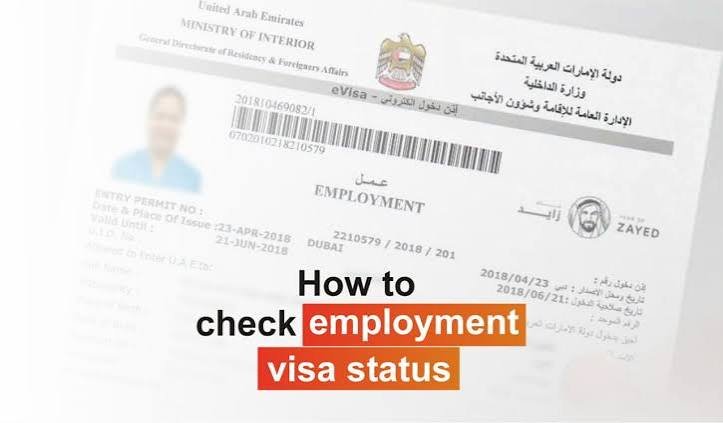
The exact documents required can vary according to the applicant’s circumstances and profession, but several requirements are common. A foreign employee should generally have a passport with sufficient validity, an approved employment offer or contract, a suitable photograph and any professional or educational documentation required for the position. The UAE government advises expatriates preparing to work that their passports should be valid for at least six months.
Applicants should also understand that document preparation can influence how smoothly the process moves. If a profession requires an attested degree, professional license or other qualification, completing that process before the employer submits the application can prevent unnecessary delays. Workers should keep digital and physical copies of important documents and make sure their personal information is consistent across the passport, employment offer, certificates and government applications.
3.1 Passport and Personal Documents
A valid passport is one of the most fundamental requirements. The official UAE government guidance states that expatriates should ensure their passport is valid for at least six months before moving to the UAE for employment. A recent passport-size photograph is also commonly required during the application process.
The applicant should check spelling, date of birth, passport number and nationality details carefully. A small discrepancy can create additional administrative work. If the applicant has changed their name or has documents issued under different names, supporting documentation may be required depending on the circumstances.
3.2 Educational and Professional Certificates
Not every UAE job requires a university degree, but some positions require proof of education, professional qualifications or licensing. Engineers, healthcare professionals, teachers and other regulated occupations may face requirements beyond those applicable to ordinary positions.
Foreign educational certificates may need attestation before they can be accepted for particular immigration or employment purposes. The UAE government specifically advises foreigners that degree certificates obtained outside the UAE need to be attested where applicable.
4. How the UAE Employment Visa Process Works
The UAE employment visa process is easier to understand when divided into stages. First, the worker receives and accepts a legitimate employment offer. Next, the employer applies for the appropriate work permit or initial approval. After the necessary immigration authorization is issued, the employee can enter the UAE when applying from abroad, or complete the required status-change process if already legally inside the country. Medical fitness testing, Emirates ID procedures and residence formalities then follow.
The UAE has introduced the Work Bundle to make employment and residency procedures more integrated. The official government portal says the platform brings together services involving work permits, residency procedures, Emirates ID, medical examinations and employment contracts. It also reports that the initiative has reduced the process from multiple services and steps into a more integrated experience.
4.1 Receiving and Accepting a Job Offer
The employment journey normally begins with an official job offer. According to the UAE government, the private-sector employment offer contains information about the rights and obligations of both employer and employee and should be provided in Arabic and English, along with a third language understood by the worker where applicable. The worker reviews the offer and provides the required approval or signature before the employer proceeds with the work-permit application.
This is the stage where applicants should slow down rather than rush. Check the salary, job title, working location, contract duration, benefits, probation terms and other conditions before accepting. A genuine employer should not pressure an applicant into signing a document that differs materially from what was originally discussed.
4.2 Applying for the Initial Work Permit
Once the employment offer is accepted, the employer submits the relevant application to MoHRE or the appropriate authority. The signed offer is attached to the initial work permit application for review. The official UAE government portal states that initial approval allows the worker to enter the UAE for employment procedures when the employee is being recruited from outside the country.
The employer’s status is also important. A company needs the appropriate license, registration and compliance status before it can employ foreign workers. MoHRE can refuse or suspend work-permit services when establishments provide incorrect documentation, fail to comply with relevant labor systems or otherwise violate applicable requirements.
4.3 Entering the UAE and Completing Residency Procedures
After the required entry authorization is issued, the employee can travel to the UAE according to the conditions of the permit. Once inside the country, the employee completes the remaining steps, which can include medical fitness testing, biometric registration, Emirates ID procedures and residence formalities.
The UAE government explains that sponsored entry permits are generally valid for a specified period and that the sponsored individual must complete the necessary residency procedures after entering the country. The exact sequence can vary by emirate and application type, so employees should follow the instructions provided by their employer and the relevant government authority.
5. Medical Fitness Test and Emirates ID
The medical fitness test is a key part of the residence process for foreign workers. Applicants generally undergo screening required by UAE regulations before residence can be finalized. The purpose is to determine whether the applicant meets the applicable health requirements for residency.
After the required medical procedures, the worker also completes the Emirates ID process. The Emirates ID is an important identification document used for many everyday government and private-sector services. The UAE’s Work Bundle integrates medical examination, fingerprinting and Emirates ID-related procedures with employment and residency services, making the overall onboarding process more streamlined.
Workers should attend the medical examination at an approved center and follow the instructions given by the relevant authority. Attempting to bypass official medical or identity procedures can cause serious immigration problems. Once all requirements are successfully completed, the employment residence status can be finalized according to the approved application.
6. Employment Visa Costs in the UAE
The total cost of a UAE employment visa is not necessarily one fixed amount. Costs can involve work-permit fees, entry authorization, medical testing, Emirates ID, residency-related charges, insurance where applicable and other administrative expenses. The amount can also depend on the employer’s classification and the type of work permit.
MoHRE states that work-permit issuance and renewal costs can range from AED 250 to AED 3,450, depending on the company’s classification and the applicable permit. This figure should not be interpreted as the total cost of every employment visa because other immigration and onboarding charges can apply.
Employees should also be cautious about unexpected demands for money. The UAE government specifically advises jobseekers that if a hiring company or recruitment agency asks the applicant to pay money to process a supposed visa or medical test, that can be a sign that the job offer is not genuine.
| Employment stage | Possible cost category |
|---|---|
| Work permit | MoHRE permit fee depending on classification |
| Entry authorization | Immigration-related fee where applicable |
| Medical fitness | Approved medical examination fee |
| Emirates ID | Government identification fee |
| Residence processing | Applicable immigration/residency charges |
| Document attestation | Charges may apply depending on document and country |
| Other services | Translation, typing or administrative charges may apply |
7. How Long Does a UAE Employment Visa Take?
There is no universal processing time that applies to every applicant because the timeline depends on the employer, document readiness, government approvals, profession and whether the worker is applying from outside or inside the UAE. Missing documents, incorrect information or additional professional approvals can extend the process.
The UAE’s Work Bundle is intended to make employment-related procedures faster. The official government portal says the integrated system has reduced the number of steps and documents involved and has significantly reduced the stated processing timeline for eligible services.
For applicants, preparation remains one of the best ways to avoid unnecessary delays. Make sure the passport is valid, certificates are prepared where needed, photographs meet requirements and personal information is accurate. If an employer says the application is delayed, the worker should ask for a clear explanation rather than repeatedly paying unofficial intermediaries.
8. UAE Employment Visa Validity and Renewal
The validity of an employment residence visa depends on the relevant immigration category and approval. The employment relationship itself is connected to the work permit and contract, so employees should keep track of both employment and residence expiration dates.
MoHRE states that a standard work permit for recruiting a worker from outside the UAE is valid for two years, while several other work-permit categories also have defined validity periods.
Renewal should be handled before the existing authorization expires. The employer normally manages the renewal for an employer-sponsored employee. Workers should not wait until the last moment because an expired permit or residency can create administrative and legal complications. Keeping copies of the employment contract, Emirates ID and immigration documents can make renewals and job changes easier to manage.
9. Can You Change Jobs on a UAE Employment Visa?
Changing employers in the UAE is possible under applicable labor and immigration rules, but the employee must follow the correct procedure. A worker should not simply start working for a different company without obtaining the necessary authorization.
MoHRE lists a work permit to transfer a non-UAE worker from one establishment to another, showing that the legal framework provides a route for changing employment. The exact conditions depend on the employee’s situation, contract, previous employer, new employer and applicable regulations.
The safest approach is to complete the required transfer, cancellation or new sponsorship procedures before starting the new job. Employees should also understand their contractual rights and obligations, including notice requirements and settlement of outstanding salary or other entitlements.
10. Jobseeker Visa vs Employment Visa
A jobseeker visa is different from an employment visa. The jobseeker visa allows eligible foreign nationals to enter the UAE to explore employment opportunities without a host or sponsor for the visit, while an employment visa is connected to an actual employment relationship and work authorization.
The UAE government currently states that jobseeker visit visas may be issued for 60, 90 or 120 days, subject to eligibility conditions. Applicants generally need at least a bachelor’s degree or equivalent and must meet one of the specified professional or university-related eligibility routes, along with the required financial guarantee.
A jobseeker visa does not mean the holder can automatically start working. Once a person finds a job, the employer must arrange the appropriate work permit and employment residency procedures. This distinction is extremely important for people entering the UAE to search for work.
11. Can You Work on a Tourist or Visit Visa?
No. A person should not work for a UAE employer while holding only a tourist or ordinary visit visa. The official UAE government guidance clearly states that UAE law prohibits working while holding a visit or tourist visa, whether the work is paid or unpaid.
This rule protects both employees and employers. Someone who accepts cash work while visiting may believe that the arrangement is harmless, but undocumented employment can expose both parties to penalties and other legal consequences. The proper approach is to obtain the appropriate work authorization before beginning employment.
If an employer tells a candidate, “Start working now and we will fix the visa later,” that should be treated as a serious warning sign. A legitimate employer should understand and follow the UAE employment authorization process.
12. UAE Employment Visa for Family Sponsorship Residents
Not everyone working in the UAE needs an employer-sponsored residence visa. A person may already have legal residence under family sponsorship and then obtain a work permit that allows them to work for an eligible company.
MoHRE specifically lists a work permit for a resident on family sponsorship, allowing companies to employ eligible residents who already hold family-sponsored residence.
This arrangement demonstrates why “work permit” and “residence visa” should not be treated as interchangeable terms. Someone can have residence through one route while obtaining employment authorization through another. Employees in this situation should make sure the employer obtains the correct permit before they start working.
13. Common Employment Visa Problems and How to Avoid Them
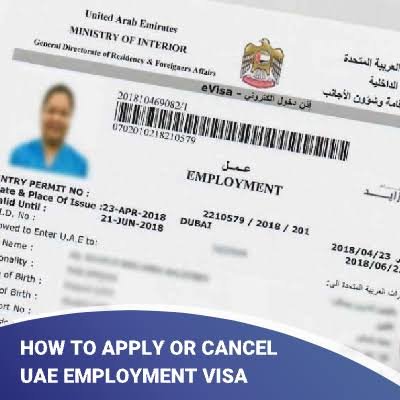
Employment visa problems often begin before the employee even arrives in the UAE. Fake job offers, inaccurate contracts, unlicensed recruiters, requests for unexplained payments and promises of unusually high salaries can all create risks. The UAE government advises jobseekers to check the email address used by an employer, keep their CV updated and avoid paying recruitment commissions or questionable visa-processing charges.
Another common problem is accepting a job without reading the employment offer. The official UAE employment process provides protections around the offer and contract, and employers cannot simply replace or alter provisions without following the applicable rules and obtaining the required consent or approval.
Before traveling, a job applicant should verify the employer, carefully read the written offer and retain copies of all documents. After arrival, the employee should confirm that the employer is completing the work-permit and residence procedures properly. If something seems suspicious, it is better to stop and verify the situation with the appropriate UAE authority than to rely on a middleman.
Another issue is document mismatch. A passport name, degree certificate, employment contract and application should contain consistent information. Applicants from overseas should also check whether their qualification needs attestation or whether their profession requires a specific license. Preparing these documents early can turn a frustrating visa process into a relatively straightforward administrative exercise.
The UAE’s digital transformation has also changed how employment procedures are handled. The Work Bundle now integrates many employment, medical, identity and residency services, while government portals provide access to employment and immigration information.
For workers planning to move in 2026, the best strategy is simple: secure a genuine job, verify the written offer, let the employer process the correct work authorization, complete medical and identity requirements, and never begin employment illegally. The process may seem complicated at first, but it becomes much clearer when each stage is handled separately.
14. Conclusion
An employment visa in the UAE is more than a simple stamp or digital approval. It is part of a structured legal process connecting employment authorization, immigration status, residency, medical fitness, identity registration and the employment contract. For most foreign workers, the employer plays a central role in arranging the work permit and employment-related residency procedures, while the employee must provide accurate documents and complete required personal steps.
The rules continue to evolve as the UAE expands digital government services and streamlines employment procedures. In 2026, the Work Bundle is making many employment and residency processes more integrated, while MoHRE continues to regulate work permits and employment relationships.
If you are planning to work in Dubai, Abu Dhabi, Sharjah, Ajman, Ras Al Khaimah, Fujairah or Umm Al Quwain, always check the requirements applicable to your exact employment situation. A job offer should be genuine, your documents should be accurate, and you should have the appropriate authorization before beginning work. Following the official process is not merely a formality—it is the foundation for working and living in the UAE legally and with greater peace of mind.
15. Frequently Asked Questions
1. What is an employment visa in the UAE?
An employment visa is the immigration status associated with working and residing in the UAE for an employer. The process normally involves a work permit, entry or status-change procedures, medical fitness testing, Emirates ID registration and residence formalities. The exact requirements depend on the employee, employer and applicable employment category.
2. How much does a UAE employment visa cost?
There is no single total price for every applicant. MoHRE states that work-permit issuance and renewal fees can range from AED 250 to AED 3,450, depending on the employer’s classification and permit type. Additional costs can apply for immigration processing, medical testing, Emirates ID and other required services.
3. Can I work in the UAE on a tourist visa?
No. UAE government guidance states that working on a tourist or visit visa is prohibited. You should obtain the appropriate work authorization before beginning employment.
4. Can I find a job in the UAE before getting an employment visa?
Yes. Eligible foreign nationals can use the UAE’s jobseeker visit visa to explore employment opportunities without a host or sponsor, subject to the applicable eligibility requirements. However, finding a job does not automatically authorize employment; the employer must arrange the proper work permit and employment-related residency procedures.
5. How long is a UAE employment work permit valid?
Validity depends on the type of permit. MoHRE states that the work permit used to recruit a worker from outside the UAE is valid for two years, while other categories have their own validity periods.
- 1. What Is an Employment Visa in the UAE?
- 1.1 Work Permit vs Employment Residence Visa
- 2. Who Needs a UAE Employment Visa?
- 2.1 UAE and GCC Nationals
- 2.2 Foreign Workers
- 3. UAE Employment Visa Requirements in 2026
- 3.1 Passport and Personal Documents
- 3.2 Educational and Professional Certificates
- 4. How the UAE Employment Visa Process Works
- 4.1 Receiving and Accepting a Job Offer
- 4.2 Applying for the Initial Work Permit
- 4.3 Entering the UAE and Completing Residency Procedures
- 5. Medical Fitness Test and Emirates ID
- 6. Employment Visa Costs in the UAE
- 7. How Long Does a UAE Employment Visa Take?
- 8. UAE Employment Visa Validity and Renewal
- 9. Can You Change Jobs on a UAE Employment Visa?
- 10. Jobseeker Visa vs Employment Visa
- 11. Can You Work on a Tourist or Visit Visa?
- 12. UAE Employment Visa for Family Sponsorship Residents
- 13. Common Employment Visa Problems and How to Avoid Them
- 14. Conclusion
- 15. Frequently Asked Questions